Garage-Scale Industry: How Micro-Manufacturing Is Minting a New Generation of Hardware Founders
Every industrial era has its founding myth. The twentieth century belonged to the cathedral factory — vast, capital-intensive, and accessible only to those who could raise millions before producing a single unit. That gate kept hardware entrepreneurship the province of incumbents for decades. Today, a quieter revolution is underway, and its logic will be familiar to anyone who watched the software industry transform after 2006.
Just as cloud computing eliminated the need to buy servers before shipping code, micro-manufacturing is eliminating the need to build factories before shipping product. The implications for American industrial entrepreneurship are difficult to overstate.
The AWS Moment for Physical Products
The parallel deserves to be made explicit. When Amazon Web Services reduced the cost of launching a software company from hundreds of thousands of dollars to a credit card, the result was not merely more startups — it was a different kind of startup. Founders could experiment, fail cheaply, and iterate toward product-market fit without a board meeting for every server purchase.
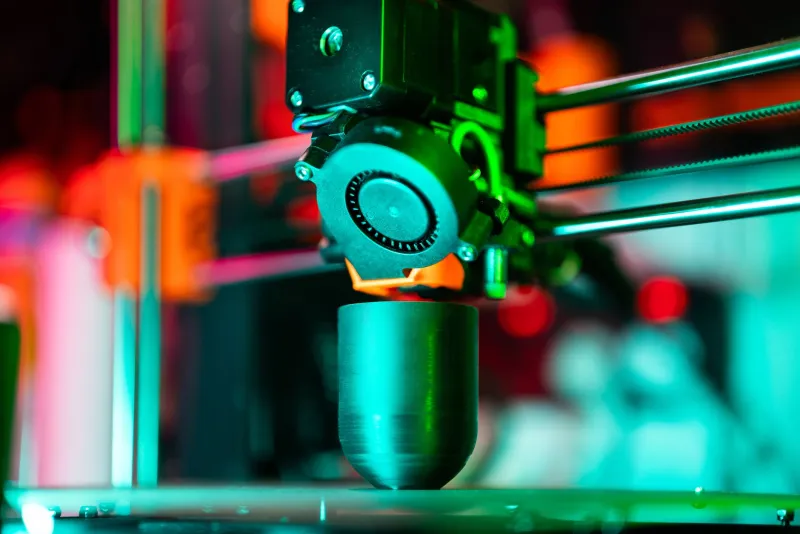
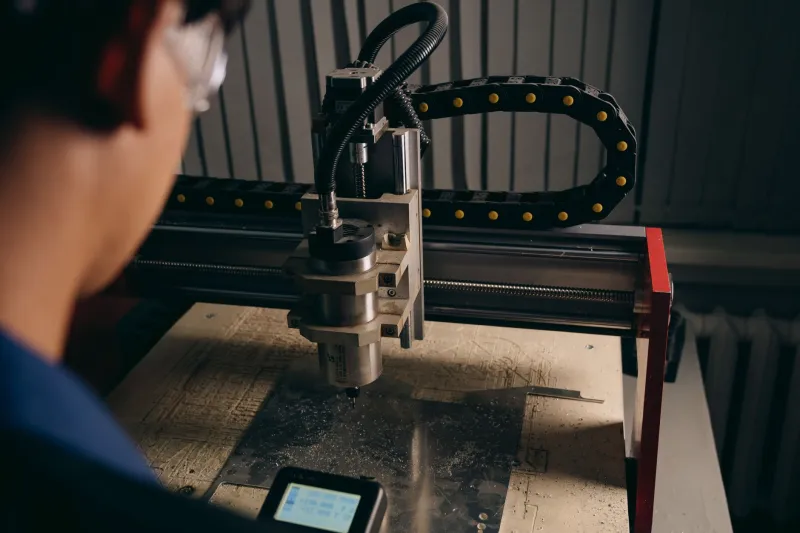
Micro-factories are applying the same economics to atoms. A single-cell production facility — compact CNC machining, additive manufacturing, automated assembly, and adaptive quality systems under one modest roof — can be established for a fraction of the traditional capital outlay. Flexible tooling means one cell can serve multiple product lines. Distributed networks mean a founder can add capacity geographically rather than duplicating a monolith.
The result is a capital structure that looks more like a software company's than a manufacturer's. Fixed costs shrink. Iteration cycles compress. And the existential risk of a single product bet — the risk that killed so many hardware ventures before they could learn — drops accordingly.
The Founders Already Building
Across the United States, this model is moving from theory to practice. In the industrial corridors of the Midwest and the Southeast, hardware companies are launching from shared makerspaces and single-cell facilities, producing everything from precision medical components to aerospace fasteners at volumes that would have been economically impossible under the old model. Regional manufacturing hubs in Ohio, North Carolina, and Texas now host startup ecosystems that look strikingly like the software accelerators of the 2010s — shared equipment, staged capital, mentorship networks, and founders who treat the factory floor as a place of iteration rather than final commitment.
These companies share a common trait: they scale by replication, not expansion. When demand grows, they do not build a bigger plant. They commission another cell, often closer to the next cluster of customers. Growth is modular, capital is staged, and each new node is justified by demonstrated demand rather than speculative forecasts.
Venture Capital Rediscovers the Factory Floor
Perhaps the most consequential shift is happening in the investment community. For nearly two decades, institutional capital treated manufacturing as an unscalable category — too asset-heavy, too slow, too operationally complex to produce venture-grade returns. Software's asset-light model won by default.
Micro-manufacturing is dismantling that assumption. When a production cell can be commissioned for the price of a seed round, and capacity scales in increments rather than leaps, the risk profile of hardware starts to resemble the risk profile of code. Investors are noticing. Early-stage funds focused on distributed production, defense-adjacent supply chains, and reshored precision manufacturing have multiplied across the country, and corporate venture arms — particularly in aerospace, medical devices, and automotive — are funding micro-factory startups as strategic suppliers of the future.
The pattern mirrors what happened when cloud infrastructure matured: the tooling and economics arrived first, the capital followed, and then came the breakout companies nobody predicted.
What the Next Industrial Giants Will Look Like
If the thesis holds, the industrial champions of the 2030s will not resemble the industrial champions of the 1950s. They will be networked rather than centralized, asset-modular rather than asset-heavy, and geographically distributed in ways that serve customers and resilience simultaneously. Their competitive moats will be built on iteration speed, data intelligence, and proximity — advantages that accrue to distributed architectures and are unavailable to consolidated ones.
The garage startup was always a metaphor about lowered barriers. The next chapter of American manufacturing is being written in its literal equivalent: the thousand-square-foot production cell with a founder, a business plan, and the capacity to make real things for real customers. A generation ago, that founder needed a factory to compete. Now they need only the factory's smallest viable unit — and the ambition to network it into something much larger.
The billion-dollar question is no longer whether such companies can emerge from micro-scale beginnings. It is which ones will.