Small Batches, Stronger Margins: How Micro-Manufacturers Are Profiting Where Volume Players Cannot

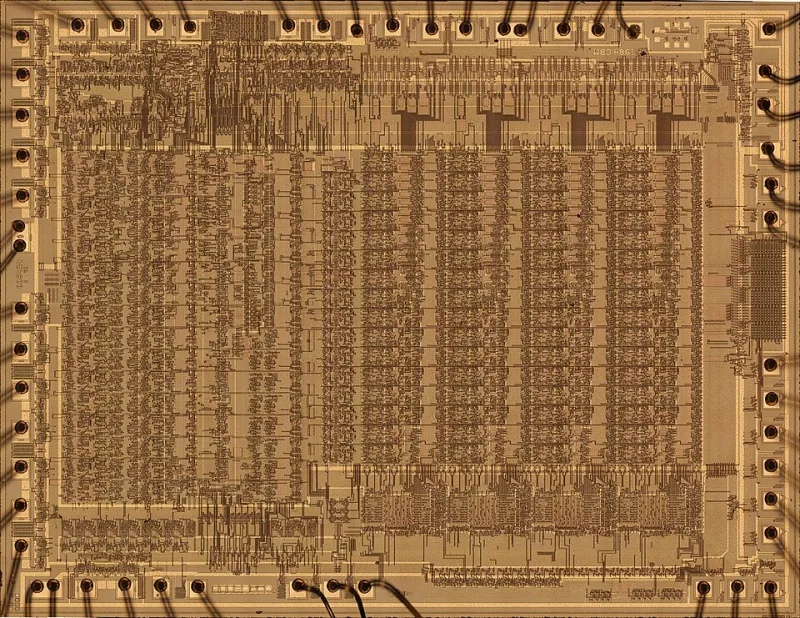
Photo: Tigerlily242, CC BY-SA 4.0, via Wikimedia Commons
The Assumption That No Longer Holds
For most of the twentieth century, the economics of manufacturing were treated as settled science. Volume drove efficiency, efficiency drove margin, and margin funded growth. The factory that produced a million identical units was, by definition, the factory that won. Entire industrial regions were built around this logic — from the steel corridors of the Midwest to the automotive assembly complexes of the Southeast.
That logic has not merely weakened. In a growing number of industrial sectors, it has inverted entirely.
Across the United States, a distinct class of manufacturers is reporting something that would have seemed paradoxical a decade ago: smaller production runs are generating higher margins than their high-volume counterparts. Not slightly higher — meaningfully, structurally higher. And the gap is widening.
Understanding why requires a fundamental reassessment of where value actually originates in modern manufacturing — and who captures it.
Where the Old Model Breaks Down
The economies-of-scale model rests on a specific set of assumptions: that demand is predictable, that product specifications remain stable over long periods, and that customers will accept standardized outputs in exchange for competitive pricing. Each of those assumptions has eroded significantly in the contemporary industrial marketplace.
Consider the medical device sector. Regulatory requirements, patient-specific design parameters, and rapid iteration cycles have made long production runs not just inefficient but often impossible. A manufacturer producing custom orthopedic implants for regional hospital networks cannot — and should not — operate like a commodity parts supplier. The product is differentiated by definition. The customer is paying for precision, not price.
Similar dynamics are reshaping aerospace components, defense subassemblies, specialty electronics, and industrial tooling. In each of these markets, the customer's primary concern is not unit cost. It is conformance, lead time, and the manufacturer's ability to accommodate design changes without renegotiating an entire production contract.
Mega-factories optimized for volume are structurally ill-equipped to compete on these terms. Their cost structures demand long runs to justify setup investments. Their scheduling systems resist the interruptions that customization requires. Their procurement pipelines are calibrated for consistency, not flexibility.
Micro-manufacturers, by contrast, are built for exactly this environment.
The Margin Mechanics of Customization
When a manufacturer serves a niche market with genuine precision capability, several financial dynamics converge in ways that volume production cannot replicate.
First, pricing power increases substantially. A customer requiring a component manufactured to tolerances of ±0.001 inches, delivered within a compressed timeline, and supported by full documentation for regulatory compliance is not shopping by price. That customer is qualifying suppliers. Once qualified, the relationship tends to be durable — switching costs are high, and the risk of disrupting a validated supply relationship is considerable. This structural stickiness allows micro-manufacturers to maintain pricing discipline that commodity producers can only dream of.
Second, the cost of customer acquisition, while real, is offset by dramatically longer retention. Industry data consistently shows that manufacturers serving specialized, high-specification markets experience lower customer churn than those competing on price in commoditized segments. The investment in winning a precision manufacturing contract pays dividends over multiple order cycles.
Third, and perhaps most counterintuitively, overhead allocation improves when volume pressure is removed. A micro-factory that is not chasing utilization targets does not overproduce to absorb fixed costs. It runs leaner inventory, carries less waste, and avoids the markdown cycles that erode realized margins at high-volume facilities.
Case Evidence: Manufacturers Who Made the Shift
A precision machining operation in western Pennsylvania provides a useful illustration. The company spent years competing on volume contracts for automotive fasteners — a market where margins had compressed to the point where operational error had almost no tolerance. After a strategic review, leadership made the decision to exit commodity production entirely and redirect capacity toward low-volume aerospace and defense work.
The transition required investment in tighter-tolerance equipment and AS9100 certification. It also required rebuilding the sales function around relationship development rather than bid response. Within three years, the operation was running at roughly 60 percent of its previous unit volume — and generating 40 percent higher gross margin. Revenue per employee increased by a comparable measure.
A similar pattern emerged at a specialty electronics manufacturer in the Research Triangle region of North Carolina. Rather than competing with offshore producers on consumer-grade circuit board assembly, the company repositioned around ruggedized electronics for industrial and military applications. Order sizes dropped. Margins expanded. Customer relationships deepened into multi-year development partnerships.
Neither of these companies discovered a secret. They applied a straightforward principle: when your production capability is genuinely differentiated, you are no longer competing in a commodity market. Commodity pricing does not apply.
Precision Tooling as a Margin Multiplier
One of the underappreciated drivers of micro-manufacturing profitability is the role of advanced tooling in enabling differentiation at scale. Modern CNC machining centers, additive manufacturing platforms, and laser processing systems allow a small-footprint facility to produce components that would have required a dedicated production line — and years of tooling investment — in the era of traditional manufacturing.
This capability compression changes the economics of customization fundamentally. A micro-factory equipped with the right tooling can shift from one product family to another with minimal changeover cost. It can accommodate an engineering change order without halting a production run. It can prototype, validate, and move to production within a timeline that a centralized plant cannot approach.
For the customer, this translates into a supplier that functions as a development partner rather than a parts vendor. For the manufacturer, it creates the conditions for premium pricing, repeat business, and — critically — a defensible competitive position that does not erode with every new entrant chasing the same volume contracts.
Rethinking the Growth Metric
Perhaps the most significant implication of the small-batch profitability model is what it suggests about how manufacturers should define and pursue growth. The instinct to chase volume — to measure success in units shipped and capacity utilized — is deeply embedded in industrial culture. It is also increasingly misaligned with where manufacturing value is actually created.
Growth in a micro-manufacturing context looks different. It is measured in new market segments qualified, in customer retention rates, in margin per order rather than margin per unit. It is achieved by deepening technical capability and expanding the range of applications a facility can serve — not by adding square footage and headcount in pursuit of the next large contract.
This reorientation is not simply a strategic preference. For a growing number of US manufacturers navigating a market defined by rapid product cycles, reshoring pressure, and customer demand for supply chain proximity, it is the most durable path to sustainable profitability.
The paradox, on examination, resolves itself. Smaller is not a constraint. In the right market, with the right capabilities, it is the competitive advantage.