Anatomy of a Half-Million-Dollar Production Cell: Where Every Dollar Goes in a Modern Micro-Factory Launch
For decades, the price of admission to American manufacturing was simple and steep: millions of dollars, a cavernous building, and months of construction before a single unit rolled off the line. That equation is changing. A growing cohort of US founders is now launching production-capable micro-manufacturing cells for roughly $500,000 — a figure that, five years ago, would have covered little more than the tooling deposit on a conventional line.
What follows is an itemized look at where that money actually goes, drawn from budget discussions with operators who have launched under the $1M threshold. The numbers vary by sector and region, but the structure holds across electronics assembly, precision machining, and light fabrication.
Capital Equipment: The Center of Gravity ($210,000–$260,000)
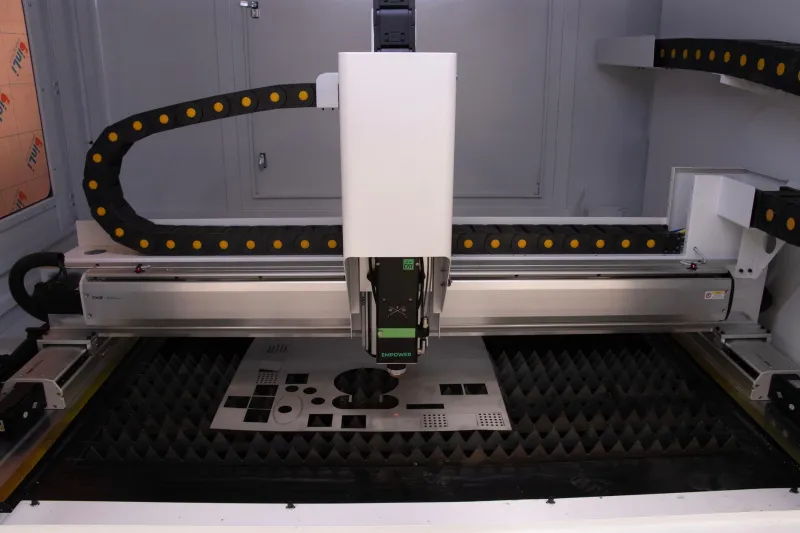
Equipment remains the largest single line item, but the composition has shifted dramatically. Rather than one large production machine, the modern micro-factory stacks several compact, flexible assets:
- Primary fabrication asset (CNC mill, pick-and-place system, or industrial 3D printer): $120,000–$160,000
- Secondary and finishing equipment: $40,000–$60,000
- Inspection and metrology (vision systems, coordinate measurement tools): $30,000–$40,000
- Materials handling, racking, and workholding: $20,000
The strategic insight here is redundancy through modularity. Two mid-tier machines cost less to acquire, install, and maintain than one flagship system — and they keep producing when one goes down. Founders consistently describe this as the single most important capital decision they made.
Software and Digital Infrastructure ($35,000–$55,000, Year One)
A micro-factory without a digital backbone is just a workshop. The software stack typically includes:
- MES or production scheduling platform: $12,000–$20,000 annually
- CAD/CAM licenses: $6,000–$12,000
- ERP-lite and inventory management: $8,000–$15,000
- Quality documentation and traceability tools: $5,000–$10,000
Cloud-delivered systems have collapsed what was once a six-figure enterprise software implementation into a subscription line item. Several operators noted they deliberately over-invested here relative to equipment — the ability to quote quickly, track jobs, and prove traceability wins contracts that offset every hardware dollar.
Space: Renting Small and Strategically ($30,000–$50,000, Year One)
This is where the micro-factory model diverges most sharply from traditional builds. A functional cell typically fits in 1,500 to 3,000 square feet. At industrial rents of $10–$18 per square foot annually in secondary US markets — think Greenville, Dayton, or Wichita rather than coastal metros — first-year occupancy costs land well under $50,000 including utilities and insurance.
Contrast that with the land acquisition, construction, and fit-out costs of a conventional facility, which routinely run $2M–$5M before equipment. The micro-factory leases its footprint instead of owning it, preserving capital for capability.
People: A Lean, Multi-Skilled Core ($120,000–$160,000, Year One)
Most sub-$1M launches begin with two to three people: a founder-technician, one skilled operator, and either a part-time quality specialist or a contract machinist. Fully loaded payroll for that core team runs $120,000–$160,000 in the first year.
The staffing model matters as much as the headcount. Successful micro-factory operators hire for range — people who can program, run, inspect, and troubleshoot — rather than depth in a single station. Cross-training is not a nice-to-have at this scale; it is the operating system.
Certification, Compliance, and Insurance ($25,000–$40,000)
This line item surprises first-time founders. Depending on the customer base, costs include:
- ISO 9001 certification: $15,000–$25,000 including consulting and audits
- ITAR registration (for defense-adjacent work): $3,000–$5,000
- Liability and equipment insurance: $8,000–$12,000
Operators targeting aerospace or medical customers should budget toward the high end — and should view certification not as overhead but as a market-access asset. A $30,000 ISO registration unlocks contract values that dwarf the spend.
Working Capital and Contingency ($60,000–$90,000)
The final — and most frequently underestimated — component. Materials deposits, payroll ramp-up, and the 30-to-60-day gap between shipping parts and collecting payment require a genuine cash buffer. Founders who skipped this line item describe it as their costliest mistake; those who funded it describe it as the reason they survived year one.
The Comparison That Matters
Set against a conventional facility launch — typically $3M–$10M all-in with 18 to 36 months of lead time — the half-million-dollar cell represents a 90%+ reduction in capital at risk. More importantly, it compresses the timeline from years to months, letting a founder validate demand, refine processes, and generate revenue while a traditional build is still awaiting permits.
The strategic implication for US manufacturers is not that micro-factories replace large-scale production. It is that the minimum viable factory has collapsed to a level where distributed, regional, and customer-proximate manufacturing is now an economic choice rather than a sentimental one. For enterprises weighing where the next production capability should live, the itemized answer is increasingly: closer, smaller, and sooner.