Provenance Goes Industrial: Why 'Made Nearby' Is Becoming the Label American Shoppers Actually Pay For

For two decades, the label told consumers where a product was assembled. Increasingly, it tells them how far it traveled — and that distance is becoming a price tag.
Across the American consumer landscape, a quiet experiment in marketing is underway. Brands in furniture, apparel, food-grade packaging, and even mid-tier industrial components are publishing production radii on their labels: made 212 miles from this store, shipped within nine days of manufacture, supporting 34 jobs in western North Carolina. What began as a sustainability gesture is hardening into a genuine commercial strategy, one with measurable price premiums and, importantly, a manufacturing model behind it that makes the claim credible.
The Rise of Distance as a Brand Asset
The logic is not new. 'Locally grown' transformed the grocery aisle a generation ago, and farm-to-table became shorthand for quality across the restaurant industry. What is new is the extension of provenance marketing into durable goods — a category where, until recently, consumers had no way to evaluate where or how something was made.
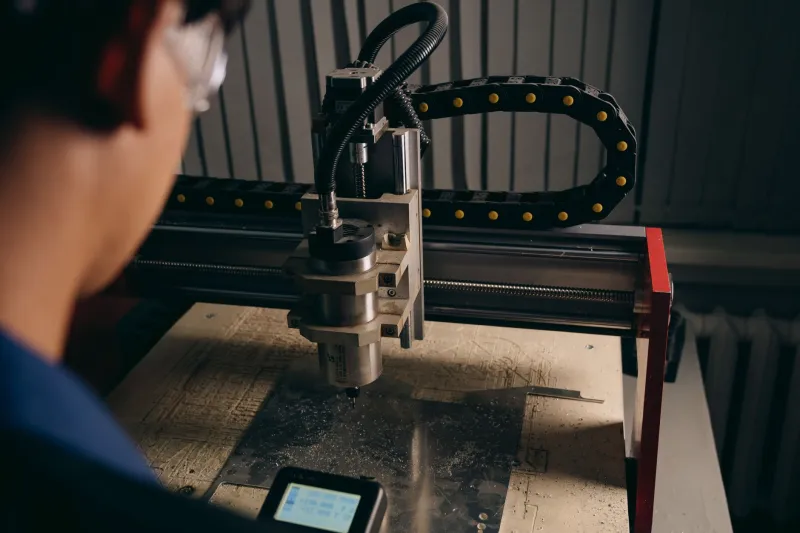
Distributed micro-manufacturing changed the calculus. When a brand can operate or contract with small production cells in several regions rather than a single overseas megafactory, the distance between production and purchase shrinks from an ocean to a highway. That proximity is now something a marketing department can quantify, verify, and promote.
Early adopters report premiums in the 10 to 25 percent range for products marketed with explicit production proximity — figures that echo the early days of organic labeling, before certification standardized the claim and broadened the buyer base.
Why Micro-Production Makes the Claim Believable
Skeptics will note that 'made in America' has been stamped on packaging for decades, often without moving purchase decisions much. The difference today is granularity and verifiability.
A national origin claim is binary and distant. A proximity claim is specific and checkable: a named facility, a mile radius, a lead time. Micro-factories make this specificity operationally feasible because they are designed for regional deployment — compact footprints, digital tooling, and flexible cells that can be sited close to demand rather than close to the cheapest labor pool on earth.
The result is a supply chain short enough that a brand can disclose it in full without embarrassment. Some companies now publish their entire production map on the product page, a level of transparency that would have been commercially suicidal under a legacy offshore model.
The Certification Question
The obvious next step is standardization. If 'made nearby' is to command durable premiums rather than one-off marketing wins, the market will likely demand a formal framework — something akin to USDA Organic for manufacturing geography.
The contours of such a standard are already visible in early voluntary programs: a defined radius (commonly 500 miles, mirroring the LEED regional-materials threshold), verified employment counts, and audited lead-time claims. Trade associations and a handful of state economic development offices have begun sketching what a certification mark could look like.
The obstacles are real. Defining 'local' for a product with globally sourced inputs is harder than it is for strawberries. Enforcement requires auditing capacity. And incumbents with long, opaque supply chains have every incentive to dilute any standard that emerges.
But the organic precedent suggests these problems are solvable — and that whoever establishes the credible standard first will shape the category for a decade.
What It Means for Manufacturers
For operators, the marketing trend is secondary to the operational one. Proximity premiums only exist because distributed production delivers genuine advantages: shorter lead times, lower inventory exposure, faster iteration, and regional labor relationships that survive trade disputes and shipping disruptions.
The brands winning at 'made nearby' are not slapping a new label on an old model. They rebuilt their manufacturing footprint first and let the marketing follow the reality. That sequencing matters. Consumers have grown fluent in detecting greenwashing; they will be equally quick to detect provenance-washing.
A Market Still Being Written
It is too early to declare 'manufactured within 500 miles' the next organic seal. But the direction is clear: American consumers are learning to read supply chains the way they learned to read ingredient lists, and brands with short, transparent, regional production footprints hold a growing advantage in that conversation.
For the micro-manufacturing sector, the opportunity is twofold — build the capacity that makes proximity claims true, and help write the standards that make them trustworthy. Those who do both may find that the shortest supply chain is also the most profitable one.