Ninety Days to Capability: How Containerized Production Pods Are Compressing the Factory Timeline

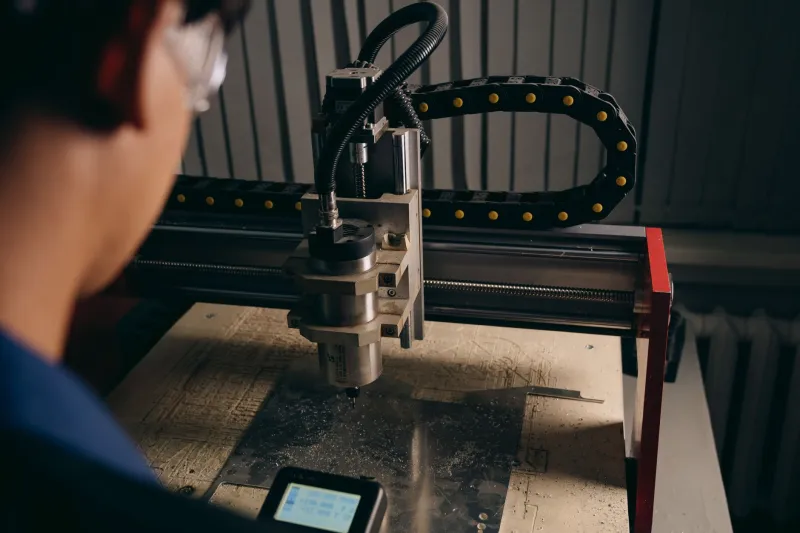
Photo by Photo by Henki on Unsplash on Unsplash
The traditional American factory buildout follows a familiar rhythm: a year of site preparation, another of equipment procurement and installation, and months more of commissioning before a single shippable part rolls off the line. By the time the ribbon is cut, the market that justified the investment may have moved on. A new generation of rapid-deployment manufacturing pods is challenging that cadence entirely — and in doing so, it is rewriting what industrial buyers should reasonably expect from a facility launch.
From Shipping Container to Certified Cell
The core concept is deceptively simple. Rather than designing a production environment from scratch, companies now procure pre-engineered modules — often housed in standard ISO containers or skid-mounted enclosures — that arrive with power distribution, HVAC, tooling, and machine connectivity already integrated. Once the unit reaches the site, commissioning becomes a matter of anchoring, connecting utilities, and validating output rather than constructing a facility.
Vendors in this space range from modular cleanroom specialists serving medical device assemblers to suppliers of containerized CNC cells for aerospace job shops. What unites them is a common promise: a functional, audit-ready production environment in roughly twelve weeks — sometimes less — from the day a contract is signed.
What Actually Happens in Those Twelve Weeks
The compressed timeline is not magic; it is discipline. Deployments that consistently hit the one-quarter mark tend to follow a recognizable sequence:
- Weeks 1–3: Site readiness and permitting. Power capacity, floor loading, and local code requirements are confirmed in parallel with module fabrication, not after it.
- Weeks 4–8: Module buildout and tooling integration. Machines are mounted, wired, and tested at the vendor's facility while the customer site is prepared — a parallelization that eliminates months of sequential waiting.
- Weeks 9–10: Delivery and mechanical commissioning. The pod arrives, is set in place, and is tied into utilities and the plant network.
- Weeks 11–12: Qualification and first article. Process validation runs, quality system checks, and first article inspection close out the launch.
Crucially, certification pathways — ISO 9001 readiness, FDA-adjacent documentation for medical work, customer-specific quality audits — are increasingly baked into the module's design rather than retrofitted afterward. A pod built with traceable wiring, documented materials, and validated software can clear a customer audit weeks after energization, not years.
Early Deployments and What They Reveal
The pattern is visible across sectors. Midwest medical device firms have used pod-based cleanrooms to stand up pilot production for new product introductions without committing to permanent cleanroom construction. Defense-adjacent suppliers, responding to the Pentagon's push for distributed munitions and electronics capacity, have deployed containerized machining cells that can be relocated as contracts shift. Even consumer hardware startups — a population profiled in the micro-manufacturing boom — are renting pod capacity by the quarter, converting fixed capital risk into an operating expense.
The common thread is that these deployments treat the factory as a product: specified, versioned, and upgradeable. When demand moves, the pod moves with it.
Speed-to-Capability as a Procurement Criterion
For decades, industrial procurement has optimized on unit cost, quality, and delivery reliability — in roughly that order. Rapid-deployment modules introduce a fourth variable that increasingly dominates the others: time to capability. A production cell that generates margin twelve weeks earlier than a conventional buildout can recoup a meaningful price premium before the traditional alternative has poured its foundation.
This is particularly consequential in volatile categories — electronics subject to tariff shifts, medical products racing through regulatory review, defense programs with compressed development schedules. In each case, the cost of waiting exceeds the cost of building.
Open Questions
The model is not without constraints. Skid-based modules cap out at a certain footprint; processes requiring heavy foundations, large ovens, or wet chemistry remain difficult to containerize. Utilities and local permitting, while parallelized, still vary widely by jurisdiction — a reminder that the slowest link in any deployment chain sets the pace. And some quality auditors remain more comfortable inspecting permanent structures than mobile ones, though that resistance is fading as documentation standards mature.
The Quarter as the New Benchmark
What began as a niche offering for startups is hardening into a benchmark that conventional buildouts will be measured against. When a compliant, functional production cell can be delivered in twelve weeks, executives will reasonably ask why a conventional expansion takes twelve months — and what the extra ten months are actually buying.
For the distributed manufacturing movement, the answer is increasingly: nothing worth waiting for.