Building the Precision Workforce: Why America's Micro-Factory Shift Demands a New Industrial Talent Model
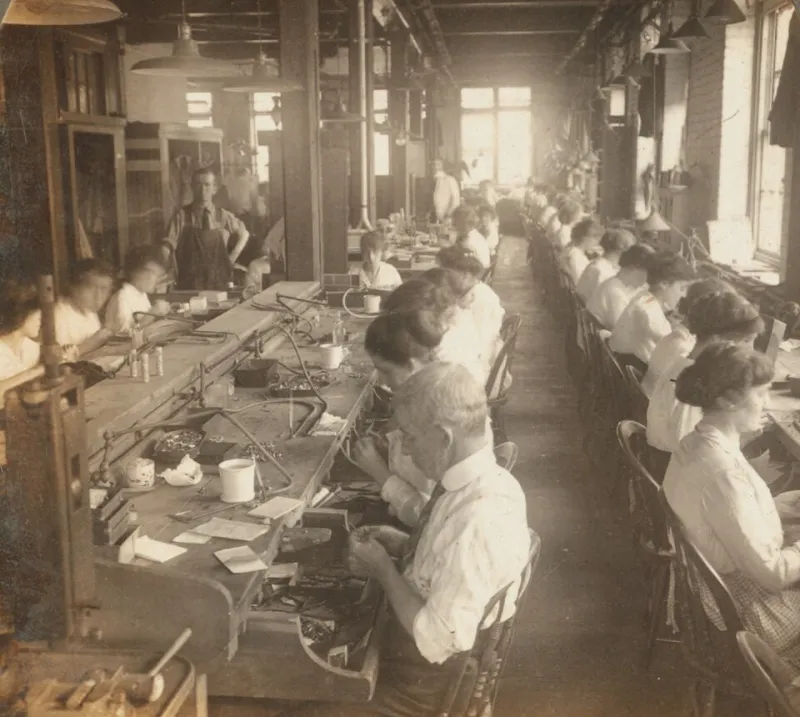
Photo: Keystone View Company -- Photographer, Public domain, via Wikimedia Commons
When policymakers and industry analysts discuss the renaissance of American manufacturing, the conversation gravitates quickly toward automation, robotics, and advanced materials. These are legitimate focal points. Yet the most consequential constraint on the growth of micro-manufacturing in the United States is neither technological nor financial—it is human. The distributed, precision-focused production model that is redefining industrial competitiveness requires a workforce that does not yet exist in sufficient numbers, and the window for building that workforce is narrowing.
The Skills Gap Is Not What It Used to Be
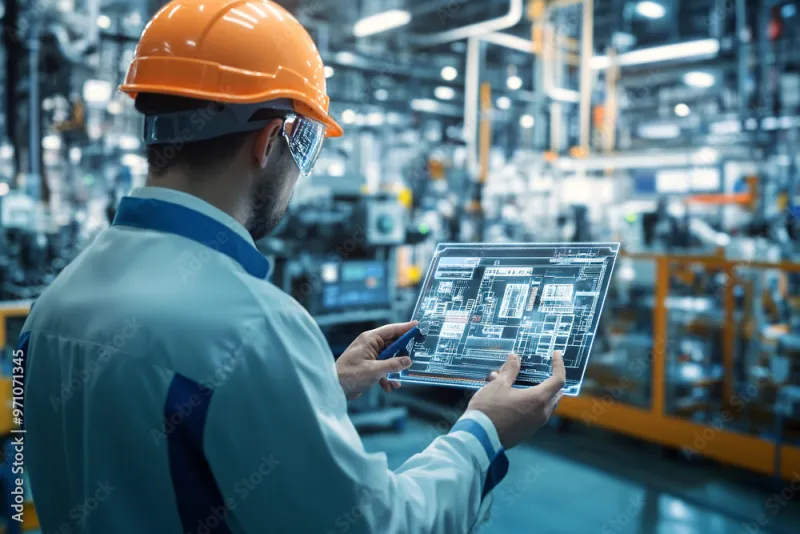
The traditional manufacturing skills gap—too few workers willing to take physically demanding, repetitive assembly jobs—is only partially relevant to the micro-factory context. The more pressing gap is qualitative, not quantitative. Micro-manufacturing facilities operate at the intersection of precision machining, digital fabrication, data interpretation, and continuous process improvement. A worker on a micro-factory floor is as likely to be reading a quality dashboard as operating a CNC machine, and the ability to do both—and to connect the insights from one with the adjustments required by the other—is a skill profile that conventional industrial training programs were never designed to produce.
This distinction matters enormously for how enterprises approach workforce development. Recruiting from the legacy pool of mass-production workers and applying a brief orientation program is not a viable strategy. The cognitive demands of precision-scaled production—attention to tolerance specifications, familiarity with digital twins, comfort with iterative quality protocols—require structured, sustained training investment.
Roles in Transition: What the Micro-Factory Actually Needs
Several specific roles are undergoing fundamental redefinition as production shifts toward distributed micro-manufacturing. Understanding which positions are evolving most rapidly is essential for any enterprise designing a talent strategy.
Precision Technicians are arguably the most critical category. Unlike general assemblers, precision technicians must understand not only how to operate equipment but how to calibrate, maintain, and troubleshoot it within tight tolerance windows. Community colleges and technical institutes across states like Ohio, Texas, and Michigan are beginning to develop dedicated precision manufacturing curricula, but program capacity remains far below projected industry demand.
Process Data Analysts represent an emerging hybrid role that did not meaningfully exist in traditional manufacturing environments. These individuals interpret the real-time production data generated by connected micro-factory equipment, identify deviations before they become defects, and communicate findings to both technical and operational stakeholders. The role requires a combination of statistical literacy, manufacturing process knowledge, and communication skill that spans traditional vocational and analytical disciplines.
Multi-Cell Operators reflect another structural shift. In a micro-factory, where floor space is constrained and production volumes per run are smaller, workers are routinely responsible for overseeing multiple production cells simultaneously. This demands a breadth of operational competency—and an adaptability to changing product configurations—that mass-production line work rarely cultivated.
Certifications That Actually Signal Readiness
As the micro-manufacturing sector professionalizes, a clearer hierarchy of relevant credentials is emerging. Employers developing hiring frameworks should prioritize candidates holding certifications from the Manufacturing Skill Standards Council (MSSC), particularly the Certified Production Technician Plus (CPT+) designation, which addresses quality, safety, manufacturing processes, and maintenance with a level of rigor appropriate to precision environments.
For roles with a strong digital fabrication component, credentials from the National Institute for Metalworking Skills (NIMS) in areas such as CNC turning, milling, and measurement remain highly relevant. Increasingly, employers are also recognizing certifications in lean manufacturing and Six Sigma at the green belt level as meaningful signals that a candidate can contribute to the continuous improvement culture that micro-factories depend upon.
What matters as much as the specific credential, however, is the training pathway that produces it. Enterprises that partner directly with regional community colleges and technical schools—co-designing curricula, providing equipment access, and committing to hire graduates—are building pipelines that generic credentialing bodies cannot replicate. Several micro-manufacturing operators in the Southeast and Midwest have formalized these arrangements into registered apprenticeship programs, combining paid on-the-job training with structured classroom instruction in ways that accelerate competency development and dramatically reduce early-tenure turnover.
Micro-Factories as Engines of Regional Economic Development
There is a dimension to the workforce conversation that extends beyond individual enterprise strategy. Because micro-factories are designed to be geographically distributed, they create skilled employment opportunities in communities that have not historically been centers of advanced manufacturing. Smaller cities, rural counties, and post-industrial towns that lack the infrastructure to attract a mega-factory campus are entirely capable of supporting one or several micro-manufacturing facilities.
This geographic flexibility, when coupled with deliberate community investment in workforce development, transforms the micro-factory from a production asset into a local economic anchor. A facility employing 40 to 80 precision workers in a mid-sized American city creates a multiplier effect—supporting local suppliers, generating tax revenue, and elevating the technical skill base of the surrounding labor market in ways that attract additional industrial investment over time.
State workforce development agencies in places like Pennsylvania, Tennessee, and Colorado are beginning to recognize this dynamic, directing workforce training funds toward precision manufacturing programs that align with regional micro-factory development plans. Enterprises that engage proactively with these public-sector partners gain access to subsidized training resources while simultaneously shaping the regional talent ecosystem to their specifications.
The Investment Case for Acting Now
The enterprises that will lead American micro-manufacturing over the next decade are not necessarily those with the most advanced equipment or the most sophisticated facility designs. They are those that recognize, today, that human capital is the binding constraint on growth—and that invest accordingly. Building training partnerships, designing internal development programs, engaging with credentialing bodies, and participating in regional workforce ecosystems are not peripheral HR activities. They are core strategic investments in the operational capability that precision-scaled production demands.
The workforce for America's micro-factory future will not appear organically. It must be deliberately built, and the time to begin is not when the next production contract arrives. It is now.