Ownership, Reconsidered: Inside the Shared-Equipment Cooperatives Reshaping American Micro-Manufacturing
For decades, the path into American manufacturing followed a familiar script: secure financing, purchase equipment, and build capacity one machine at a time. That script is being rewritten in unexpected places — not by venture-backed startups or corporate incubators, but by groups of small manufacturers who have concluded that outright ownership is no longer the prerequisite for production.
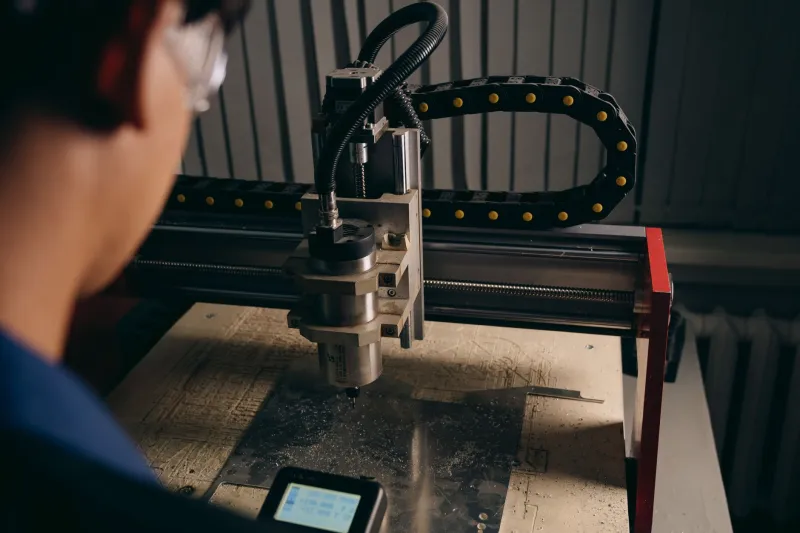
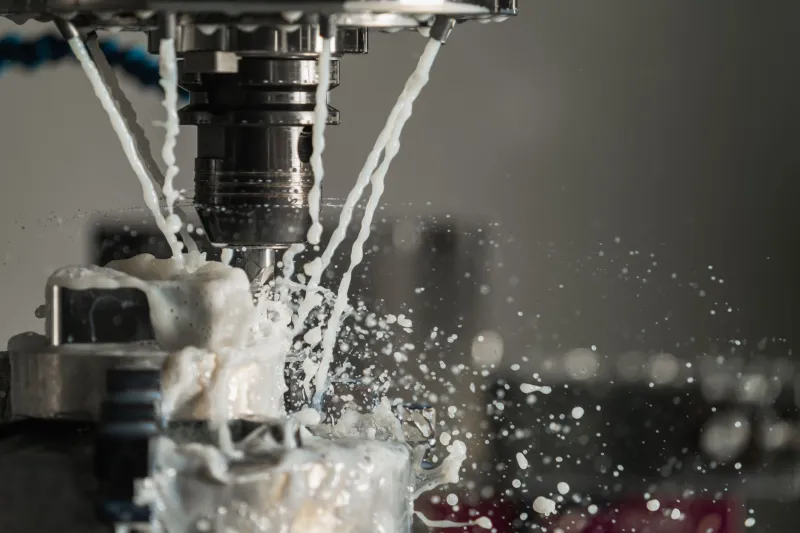
In shared-equipment cooperatives, member firms jointly acquire and operate CNC machining centers, metrology instruments, tooling inventories, and even ISO-classified cleanroom space. The arrangement spreads capital costs across multiple balance sheets, converting what would be an insurmountable individual investment into a manageable membership fee. What began as a pragmatic response to equipment inflation is hardening into something more interesting: a structural alternative to the traditional factory launch.
The Midwest Laboratory
The movement has taken deepest root in the industrial corridors of Ohio, Michigan, Indiana, and Wisconsin — regions with deep machining talent, legacy supply chains, and no shortage of entrepreneurs priced out of equipment ownership. A new five-axis machining center can easily exceed $300,000 before installation; a modest cleanroom envelope adds six figures more. For a two-person job shop winning its first aerospace or medical device contracts, that figure is prohibitive.
Cooperative models emerging in the region vary in structure, but most share three characteristics. First, governance is member-driven: equipment priorities, scheduling rules, and admission standards are set by the firms using the machines, not an external landlord. Second, utilization is contractual. Members commit to minimum hourly allocations, which stabilizes the co-op's revenue and prevents the tragedy of the commons that has doomed earlier shared-workspace experiments. Third, the cooperatives are deliberately capital-light on amenities — no coffee bars or coworking theatrics, just production infrastructure.
One Ohio-based cooperative formed by four small component makers pooled resources to acquire a horizontal machining center and a coordinate measuring machine neither could have justified alone. The members report something their individually-owned competitors cannot match: machine utilization rates above 70%, a figure most standalone job shops never approach.
The Economics of Sharing
The financial logic is straightforward. Equipment in a dedicated shop often sits idle 60% or more of the working day. Spreading a machine across six or eight member firms compresses payback periods dramatically and converts fixed costs into variable ones — a shift with real consequences for how young manufacturers survive their first demand downturn.
The benefits extend beyond the balance sheet. Cooperatives tend to standardize on common tooling and CAM workflows, reducing changeover friction between members' jobs. Shared metrology equipment raises the quality floor for the entire membership, since every firm gains access to inspection capability that would be uneconomical alone. And because members frequently serve non-competing niches, the co-op becomes an informal referral network: the shop specializing in titanium fittings hands off polymer work to a neighbor rather than losing the customer.
The Friction Points
None of this is frictionless. Scheduling disputes are the most common failure mode; a machine that is everyone's is, at moments of peak demand, no one's. Successful cooperatives address this with tiered priority systems tied to member contribution levels and transparent booking platforms, but governance discipline is not optional — it is the product.
Exit dynamics pose another challenge. When a member outgrows the co-op and wants to buy out its share or acquire the equipment outright, valuation disputes can fracture the group. The more durable cooperatives have learned to write buy-sell provisions at founding, treating departure as inevitable rather than exceptional.
There is also a cultural hurdle. American manufacturing culture prizes self-reliance, and some founders regard shared ownership as a confession of weakness. The counterargument, increasingly heard in the Midwest, is that self-reliance that ends in insolvency is merely pride with a depreciation schedule.
From Workaround to Default?
The open question is whether cooperative models remain a niche response to high equipment costs or harden into the default entry path for micro-factory founders. Several forces favor the latter. Equipment prices continue to climb faster than small-firm revenues. Precision manufacturing is increasingly software-defined, which rewards shared investment in high-end capability over fragmented ownership of mid-tier machines. And the distributed production thesis — that manufacturing capacity should sit close to customers in smaller, networked nodes — aligns naturally with cooperative ownership structures.
If the pattern holds, the implications reach beyond startup economics. Cooperative equipment ownership could become a policy instrument for regional development, a way to re-seed precision manufacturing capability in communities that lost it a generation ago — without waiting for a single anchor employer to arrive. For a sector built on the principle that smaller, distributed, and smarter outperforms larger and centralized, the shared factory may be less a compromise than a preview.
The manufacturers of the Midwest are not waiting for the verdict. They are booking machine time, splitting the payments, and discovering that in modern micro-manufacturing, the question is no longer whether you own the equipment — it is whether you can access it, reliably, at a cost that lets you compete.